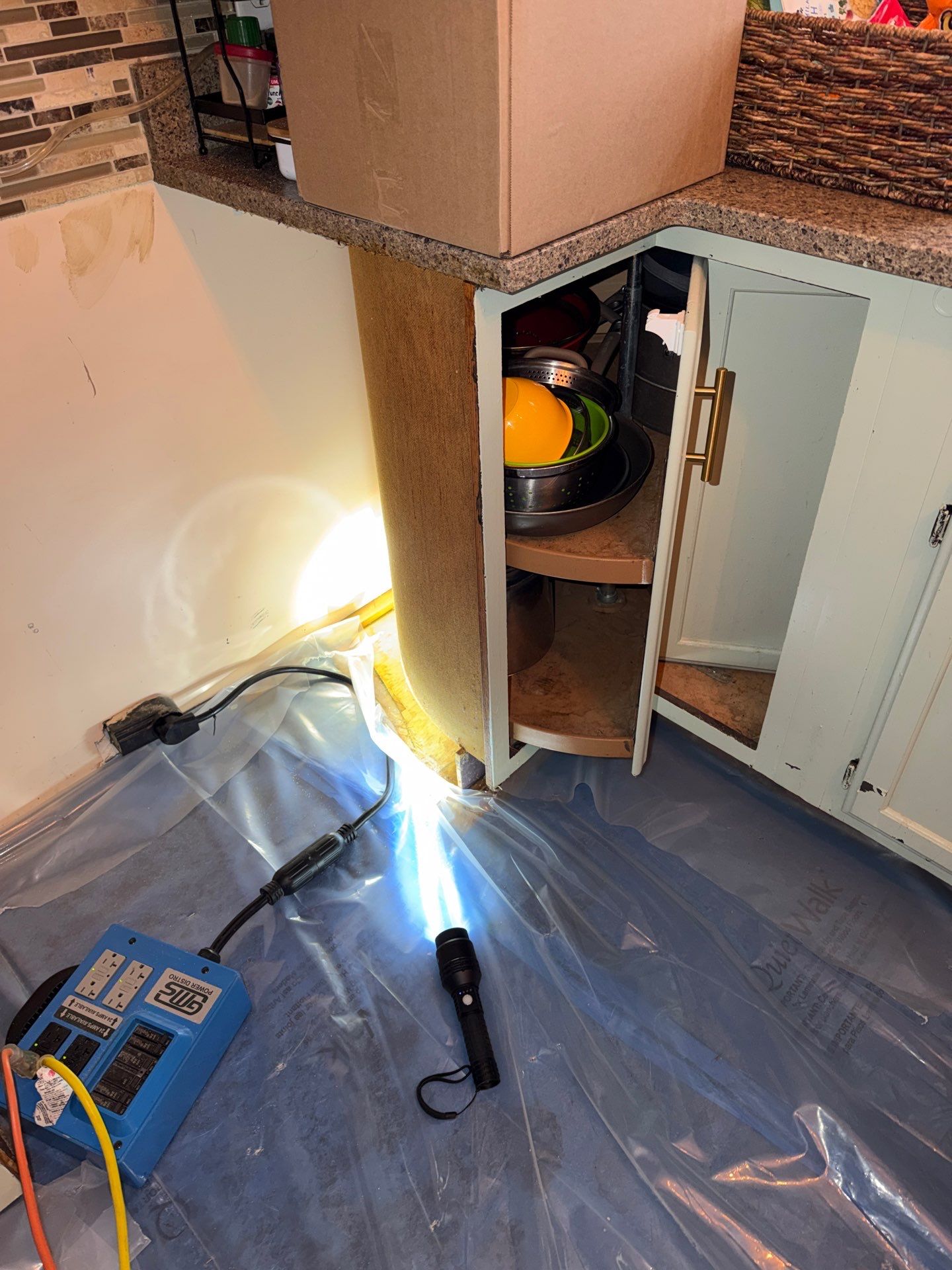
What to Do in the First 15 Minutes
Before you call anyone, do these things in order. Each one limits damage and protects your wallet.
- Kill the power. Flip the breaker labeled water heater. For gas units, turn the gas dial to OFF.
- Shut off the cold water supply. Look for the valve on the pipe entering the top of the tank. Turn it clockwise until it stops.
- Open a hot faucet upstairs. This relieves pressure and slows the leak.
- Move belongings out of the water. Cardboard, electronics, and anything porous comes out first.
- Photograph everything. Wide shots, close-ups of the tank, and any soaked materials. Your insurance adjuster will ask.
- Call a restoration company. Standing water doubles in damage every 60 to 90 minutes.
If you cannot find the shutoff valve on the tank, go to the main water shutoff for the house. It is usually near where the water line enters from the street, often in a basement, crawl space, or utility closet. Every New Whiteland homeowner should know that location before an emergency, not during one.
Signs Your Water Heater Is About to Fail
Most New Whiteland homeowners get warning signs and miss them. Watch for these:
- Rusty or discolored hot water at the tap
- Popping or rumbling noises from the tank
- Moisture or mineral crust around the base
- Hot water that runs out faster than it used to
- A tank older than 10 to 12 years
- Visible corrosion on the pressure relief valve
- Pilot light that will not stay lit on gas units
- A faint sulfur or metallic smell from hot taps
If you catch two or more of these, replace the unit before it floods. A planned swap is roughly $1,200 to $2,400 installed. A failure with cleanup runs five to ten times that.
Insurance: What You Need to Know
Most New Whiteland homeowner policies cover sudden and accidental water heater failures. They do not cover gradual leaks the insurer thinks you should have caught. Here is how to protect your claim:
- Document the failure mode (burst tank, ruptured supply line, failed valve)
- Keep the failed parts. Adjusters sometimes want to see them.
- Save photos, receipts, and the restoration company's moisture logs
- Report the claim within 24 to 72 hours
- Get a written scope of work before signing anything
- Do not throw out damaged property until the adjuster signs off
- Ask whether your policy includes loss of use coverage if you need to relocate during drying
Deductibles in New Whiteland typically run $1,000 to $2,500. If your total damage is close to your deductible, paying out of pocket may protect your premiums. A good restoration company will help you do that math honestly.
What the IICRC Process Actually Looks Like
A certified crew does not just suck up water and leave fans behind. The IICRC S500 standard requires a real sequence:
- Category assessment. Clean tank water is Category 1. If it sat more than 48 hours or touched contaminated surfaces, it becomes Category 2 or 3.
- Moisture mapping. Thermal cameras and pin meters find hidden water inside walls and under flooring.
- Extraction. Truck-mounted vacuums pull standing water at 100+ gallons per minute.
- Controlled demolition. Wet insulation, swollen baseboards, and unsalvageable drywall come out.
- Structural drying. Air movers and commercial dehumidifiers run 3 to 5 days with daily moisture readings.
- Antimicrobial treatment. Surfaces are sanitized to prevent mold growth.
- Clearance testing. Final moisture readings confirm materials are back to dry standard.
When Damage Spreads Beyond the Utility Room
Water heaters in basements often dump 40 to 50 gallons before anyone notices. That volume can saturate concrete, run along floor joists, and travel into finished spaces. If your tank is in a basement, also review our guide on flooded basement cleanup and drying. Tanks in upstairs closets cause the worst damage because gravity pulls water through ceilings into rooms below. If that is your situation, the ceiling water damage repair guide covers what to expect.
Common Mistakes That Cost New Whiteland Homeowners Thousands
We see these every week. Avoid them.
- Renting one box-store dehumidifier and assuming it is drying the structure. It is not.
- Leaving wet carpet pad in place. Pad acts like a sponge and traps moisture against the subfloor.
- Painting over stained drywall without checking moisture content first
- Waiting more than 48 hours to start drying. That window is when mold colonizes.
- Hiring an unlicensed handyman for the cleanup, then a licensed contractor for the rebuild. The handoff fails and so does the insurance claim.
- Replacing the water heater before documenting the failure
- Running the HVAC system while the space is saturated, which spreads moisture and spores into other rooms
How to Prevent the Next Failure
Once cleanup is done, take a weekend to make sure this never happens again. A short maintenance routine extends tank life by years.
- Install a drain pan and leak sensor. A $30 sensor and a $40 pan can save five figures in damage.
- Flush the tank annually. Sediment buildup is the leading cause of premature failure.
- Test the pressure relief valve. Lift the lever briefly once a year. If it does not seat back cleanly, replace it.
- Check the anode rod every 3 years. A corroded rod means the tank itself is next.
- Set the thermostat to 120 degrees. Higher temperatures accelerate tank corrosion and waste energy.
- Strap the tank in earthquake or high-wind zones. A toppled heater snaps every connection at once.
Water Heater Leak Cost Breakdown in New Whiteland
Pricing depends on how much water escaped, what it touched, and how long it sat. Here is what our New Whiteland customers typically see:
- Minor leak, contained: $500 to $1,500 for extraction, drying, and sanitizing a small area
- Moderate leak with subfloor saturation: $2,000 to $5,500 including 3 to 5 days of drying
- Major flood with finished basement: $6,000 to $15,000+ for extraction, demo, drying, and rebuild
- New water heater install: $1,200 to $2,400 standard tank, $3,500 to $5,500 tankless
- Drywall and baseboard replacement: $3 to $7 per square foot
- Flooring replacement: $4 to $12 per square foot depending on material
- Mold remediation if drying was delayed: $1,500 to $6,000 per affected area
Need more granular numbers? Our complete water damage restoration cost breakdown walks through every line item we put on a New Whiteland estimate.
How Fast Can New Whiteland Water Restoration Be On Site?
- Average New Whiteland response time: 60 to 90 minutes
- Available 24/7, including holidays and overnight
- IICRC certified technicians on every job
- BBB A+ rated since 2018
- Direct insurance billing available
- Free on-site assessment for active emergencies
- Written scope and estimate before any demo begins