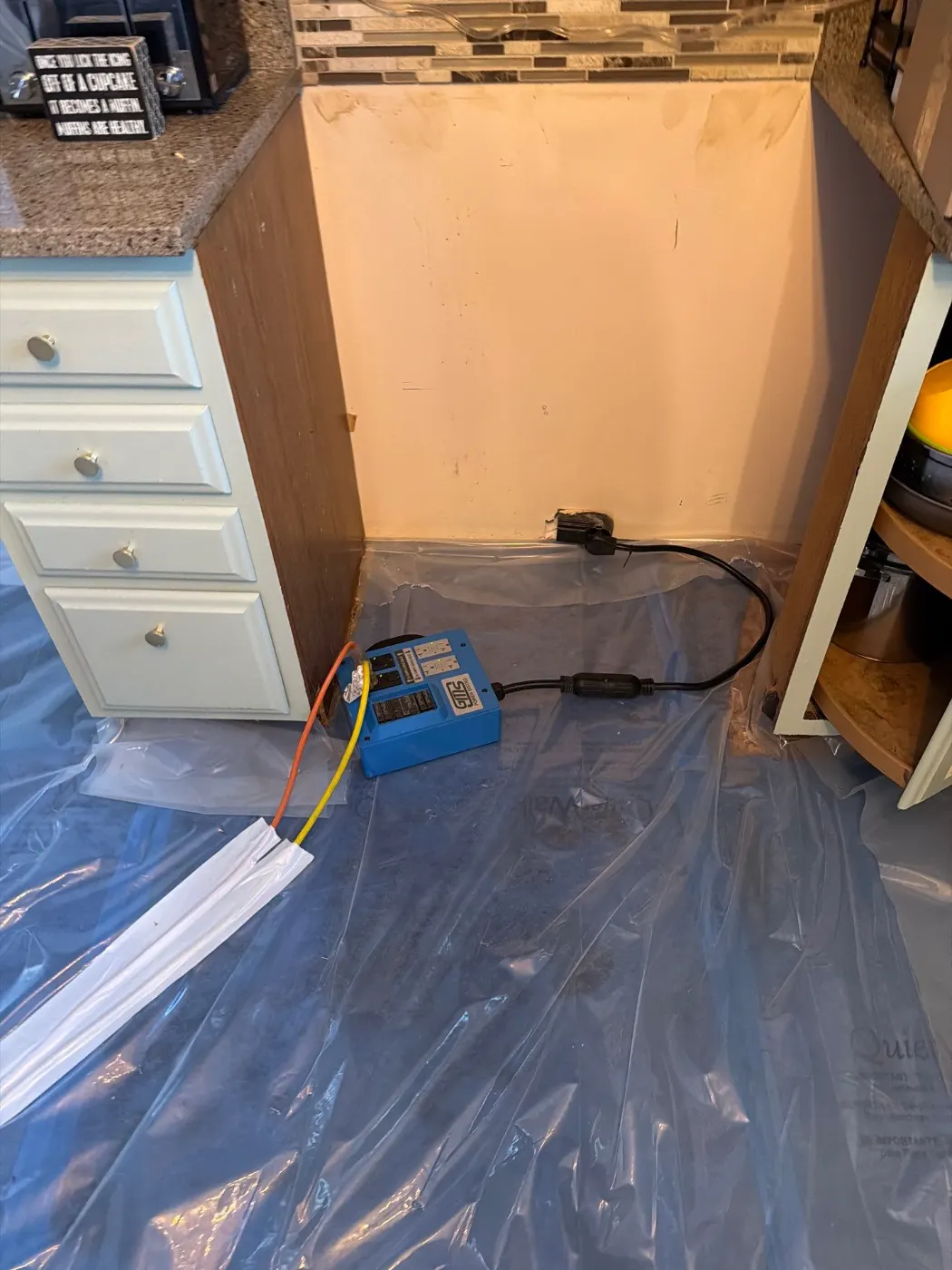
Commercial Flood Damage Cleanup in New Whiteland, IN
Flood cleanup for New Whiteland offices, retail spaces, warehouses and lower level garages, with records for flood and property claims.
New Whiteland Water Restoration handles Commercial Flood Damage Cleanup for New Whiteland, IN homeowners: emergency dispatch around the clock, IICRC certified technicians, and insurance coordination on approved claims. Call (463) 223-3831.
- Service: Commercial Flood Damage Cleanup for New Whiteland homeowners
- Service area: New Whiteland, IN and surrounding areas
- Response time: 24/7 live dispatch; emergency crews prioritized for New Whiteland
- Licensed and insured (License #RC21100059)
- Serving New Whiteland, IN since 2018
Commercial Flood Damage Cleanup for New Whiteland Businesses
Water across a warehouse floor plate keeps moving until something stops it. It runs the slab, finds the low corner, soaks pallet bottoms from underneath, and wicks up drywall before anyone locates the valve. New Whiteland Water Restoration brings high volume pumps and truck mounted extraction to commercial flood losses in New Whiteland, IN, with a crew sized to the square footage that's wet. Dispatch runs within two hours of your call, day or night, with pump capacity matched to the standing water in the building.
Concrete decides when a commercial flood job is finished. New Whiteland Water Restoration reads the slab in your New Whiteland building with in situ relative humidity probes and holds new flooring until the readings meet the flooring manufacturer's limit. That protects the new floor, since adhesive over a wet slab fails later, and the readings go in your file for the warranty.
Containment goes up where the work area has to be separated from space that's still occupied. Poly barriers, zippered entries, pressure differentials, and negative air machines with HEPA filtration keep dust and contaminated air inside the work zone. On a multitenant building each suite gets its own boundary and its own moisture record, so one tenant's drying progress never gets inferred from the suite next door.
The documentation volume on a commercial loss surprises people. Hundreds of photographs, a reading set per affected area per day, equipment logs, disposal manifests, and a contents inventory add up into a file that takes office time to assemble correctly. New Whiteland Water Restoration treats that as part of the job, so the file is complete when you need it.
The right call on a commercial flood loss gets pumping started fast and drying measured from the first day. New Whiteland Water Restoration does that across New Whiteland and Johnson County with two hour dispatch and a file your carrier can work from. Call now and get a crew moving toward your building.
Signs You Need Commercial Flood Damage Cleanup
If you notice any of these in your New Whiteland building, schedule a free inspection before the issue worsens.
Mud or silt left on the floor after floodwater pulled back from the building
Visible water or damp conduit inside an electrical room, or a panel with moisture at the base
Sump pit overflowing, or a sump pump that quit during the storm
Rust forming at the base of steel shelving uprights or pallet racking where it meets the slab
Water staining on stairwell walls or landings leading down to a basement or garage level
Standing water visible across more than one bay or section of a warehouse or retail floor
An adjuster or lender asking for moisture readings and photographs of the flood damage
A dark tide line on drywall or wall base running along a corridor at a consistent height
Sewer smell on the lower level after floodwater came up through the floor drains
Silt packed into trench drains and floor drains after a flood
How New Whiteland Water Restoration Handles Commercial Flood Damage Cleanup
We follow these steps in order on every New Whiteland job.
Removing Soaked Materials
Porous materials soaked by floodwater, such as carpet and drywall, come out to the height the readings call for and get bagged where they fall. Each area is photographed before and after, and quantities go in the log.
Disposal Records
Every load that leaves the building gets a log entry with the date and the type of material. The disposal receipt and a photo of the load go in the same file, so the removal record matches what was hauled away.
Cleaning the Structure
Concrete and block that stood in floodwater are washed with detergent from the top of the wall down and rinsed out. An antimicrobial treatment follows when the scope includes one, so drying starts on a clean surface.
Dehumidification Sizing
Dehumidifier and air mover counts come from the cubic volume of the affected space and the amount of wet material. Refrigerant units handle open floor area, desiccant units pull moisture out of masonry and concrete, and the math gets rechecked as the daily readings move.
Daily Documentation
Moisture readings, temperature and humidity logs, equipment counts by room, and photographs get recorded every day equipment runs. Affected materials get compared against dry standard readings taken elsewhere in the same building, so the file shows a drying trajectory an adjuster can follow.
Commercial Flood Damage Cleanup in New Whiteland
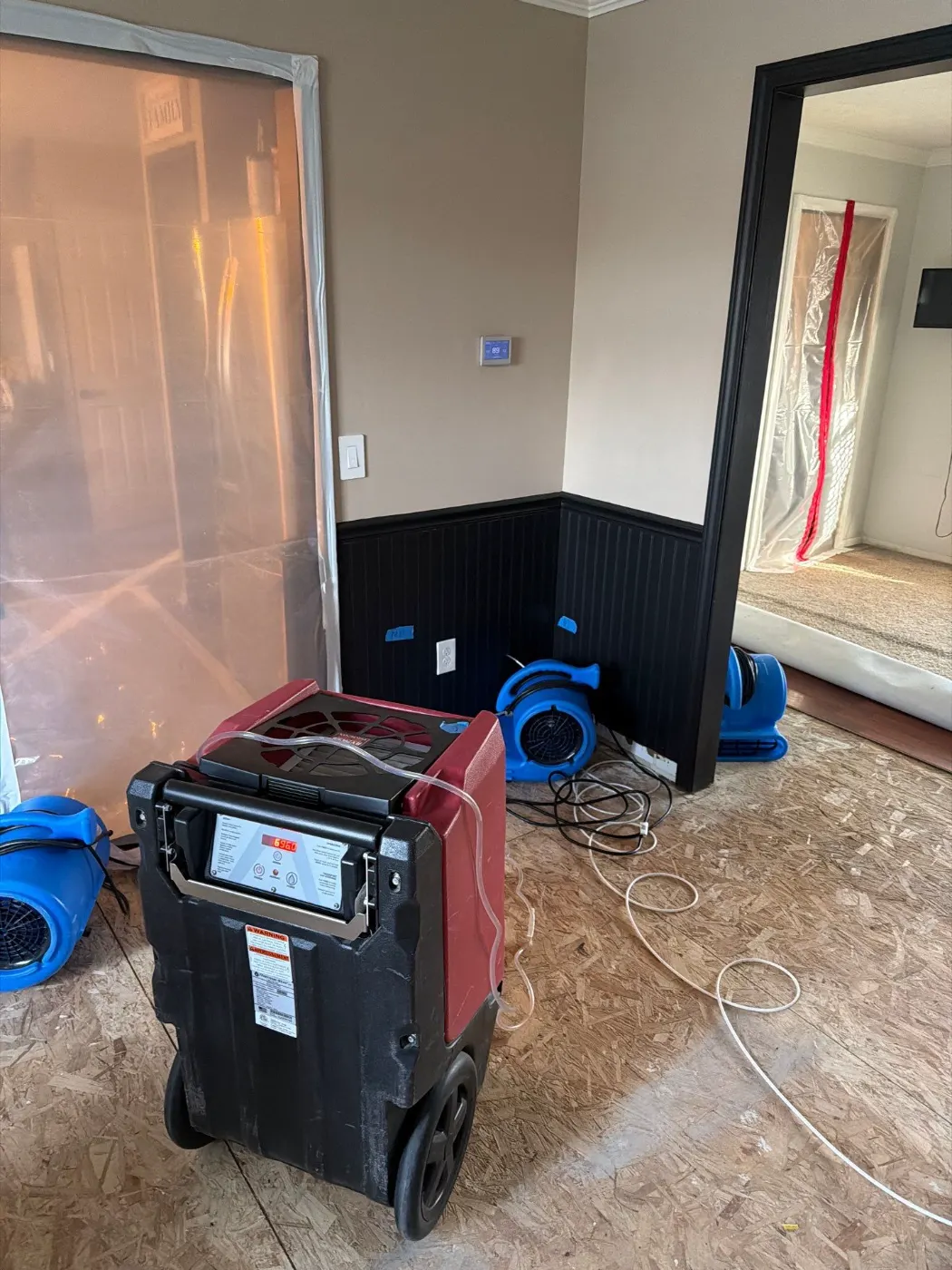
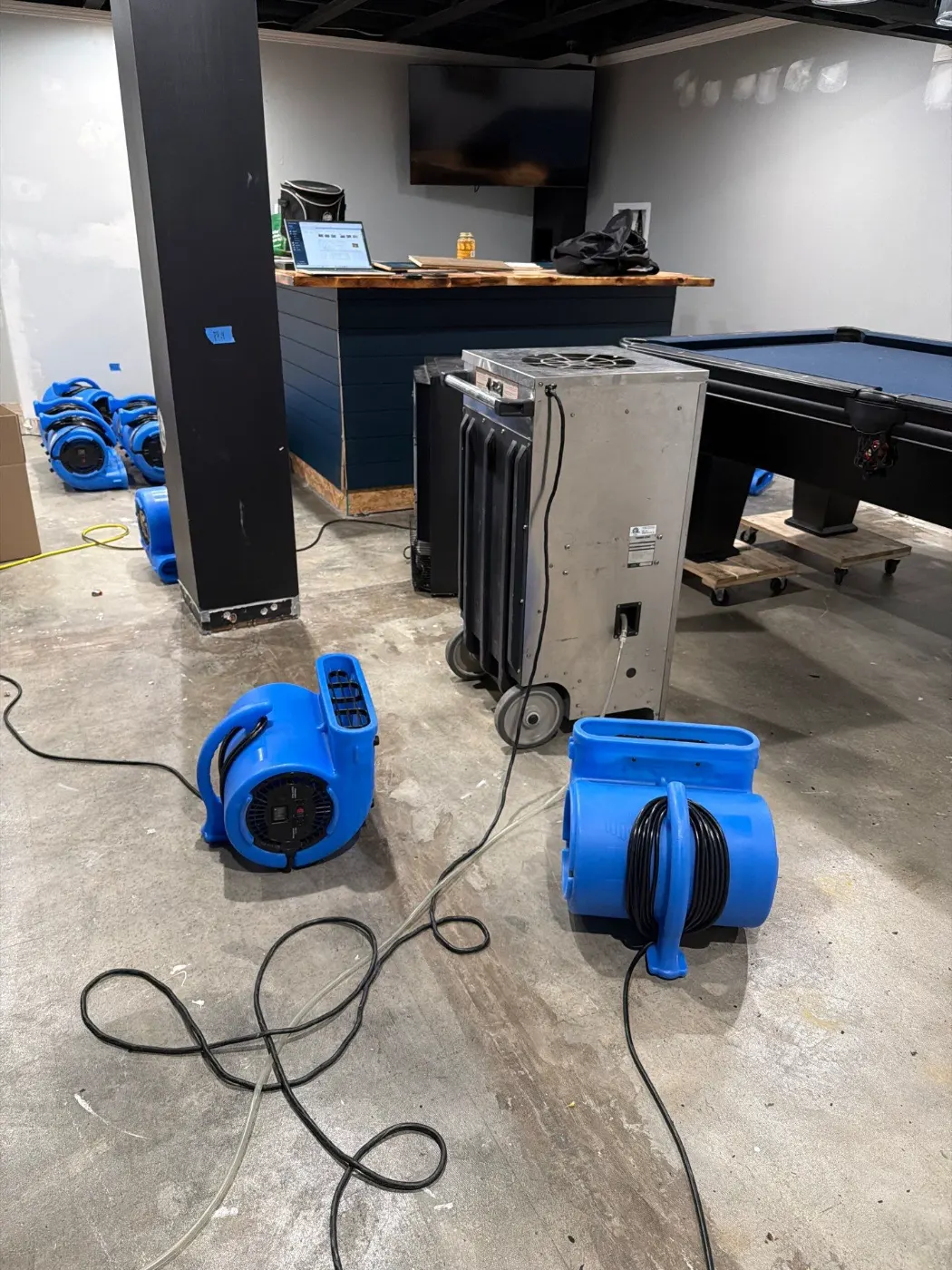
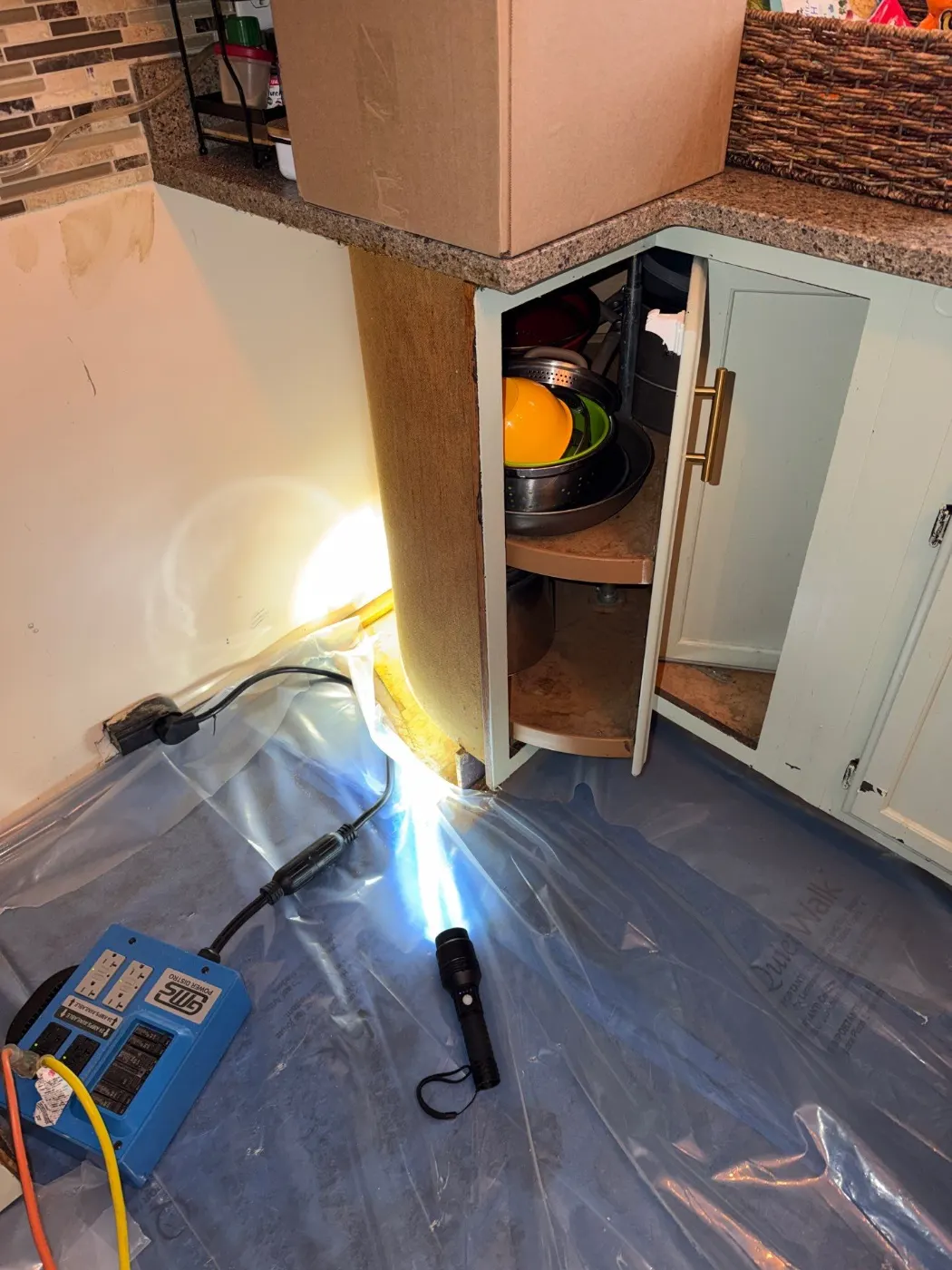
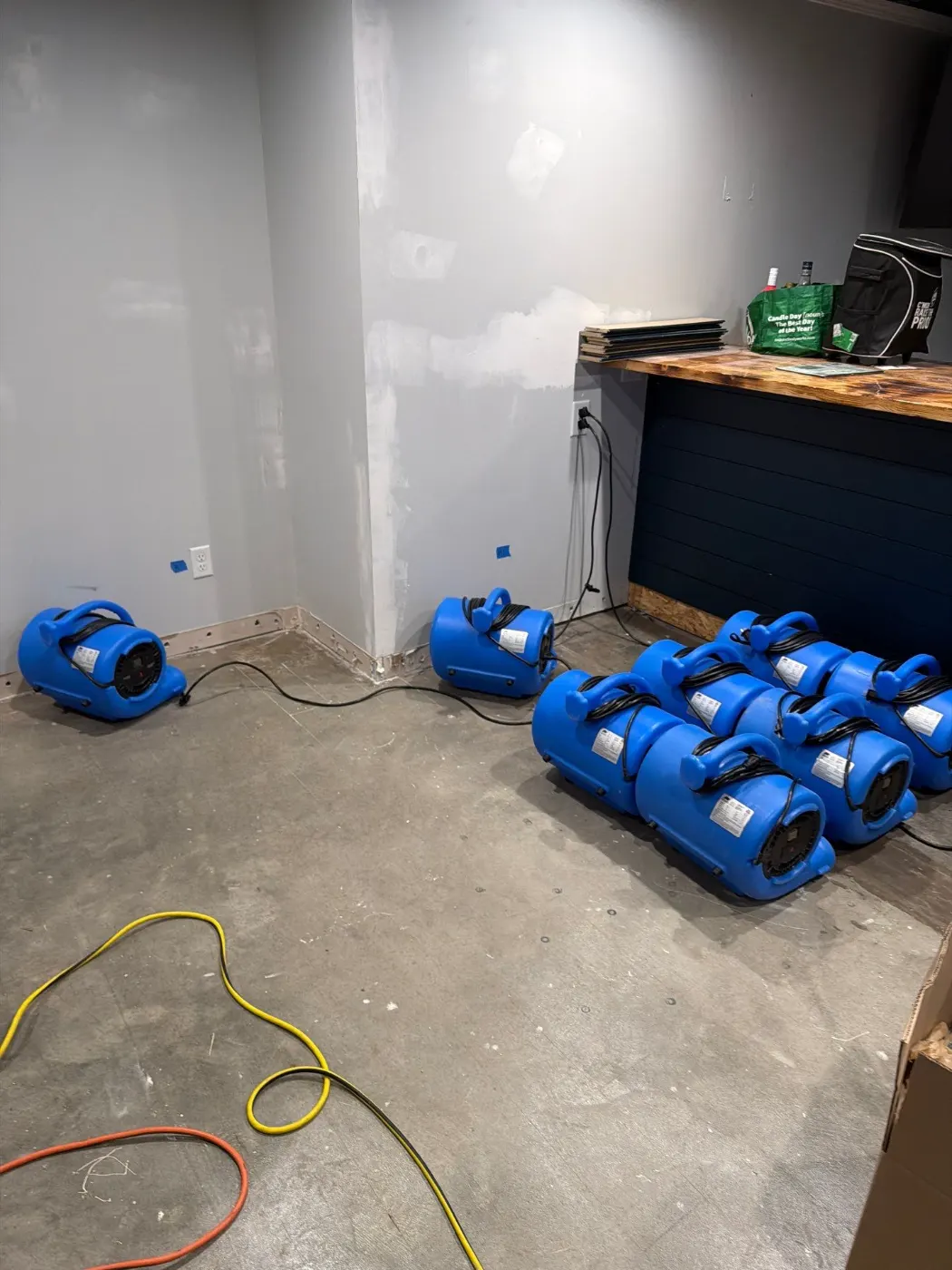
Photographs from real commercial flood damage cleanup jobs completed by our crew in New Whiteland and surrounding areas.
Commercial Flood Damage Cleanup FAQ
Questions New Whiteland property managers ask us about commercial flood damage cleanup.
Guidance and Standards for Commercial Flood Damage Cleanup
- The ANSI/IICRC S500 is the published standard for professional water damage restoration. The current edition is the Fifth Edition, 2021. IICRC S500 Standard
- EPA advises drying water damaged areas and items within 24 to 48 hours to prevent mold growth. EPA: A Brief Guide to Mold, Moisture and Your Home
New Whiteland Neighborhoods We Serve
We take commercial flood damage cleanup calls in every part of New Whiteland. Pick your neighborhood for local details.
Other Restoration Services in New Whiteland
New Whiteland Water Restoration handles the full scope of restoration work. Explore our other services below.
Water Damage Restoration in New Whiteland
24/7 emergency response. IICRC certified water restoration from extraction to full dry out.
Learn more →Basement Flooding in New Whiteland
Basement water emergencies handled fast. Extraction, drying, mold prevention.
Learn more →Sewage Cleanup in New Whiteland
Category 3 biohazard cleanup. Full containment, decontamination, structural restoration.
Learn more →Request Commercial Flood Damage Cleanup
Reach Us Directly
Our team is available 24/7 for emergencies and ready to schedule inspections during business hours.
Need Immediate Help?
For active water or mold emergencies, call us directly. We are available 24/7.