Commercial Mold Remediation in New Whiteland, IN
Mold after a water loss in New Whiteland gets a moisture survey first and a written scope before anything comes apart.
For Commercial Mold Remediation in New Whiteland, IN, New Whiteland Water Restoration starts with a scheduled certified assessment and a scope in writing, no work begins without your approval. Call (463) 223-3831.
- Service: Commercial Mold Remediation for New Whiteland homeowners
- Service area: New Whiteland, IN and surrounding areas
- Response time: Scheduled evaluation at your convenience, typically same week
- Licensed and insured (License #RC21100059)
- Serving New Whiteland, IN since 2018
Commercial Mold Remediation for New Whiteland Businesses
A lighting retrofit or a cable pull is how most of this gets found. A ceiling tile comes down in an office in New Whiteland and the back of it's stained, the batt insulation above it's damp, and the top of the gypsum is dark. What the crew can see from a ladder is usually a fraction of the affected area. New Whiteland Water Restoration maps the moisture across the plenum before anyone starts pulling material, because the size of the containment depends on how far the damp runs.
The water that started the problem still matters once mold has formed. The IICRC S500 sorts water into three categories by contamination level, and water can worsen in category as it sits. New Whiteland Water Restoration notes the likely category of the original loss in the scope for your New Whiteland building, since porous materials soaked by grossly contaminated water are usually removed and discarded.
Documentation runs parallel to the physical work the whole way through. New Whiteland Water Restoration crews log moisture readings by location and date, photograph containment, affected assemblies, removal in progress and cleaned surfaces, keep disposal records for the bagged material, and record equipment type and placement. That file is what a building owner hands to a lender, a prospective tenant or their own counsel when somebody asks what was done and when.
When an adjuster's estimate and a contractor's scope differ, a line by line comparison finds the reason. New Whiteland Water Restoration ties every item in the New Whiteland scope to a reading and a photograph, so both sides can see whether the gap comes from the size of the affected area or from the method, and the carrier decides what the policy pays.
Property managers who call New Whiteland Water Restoration before opening a damp wall save themselves the larger problem of a distributed one. Inspections in your New Whiteland building get scheduled around your access rules. The crew builds containment, establishes negative pressure with HEPA filtration, and works to IICRC S520 so the documentation holds up with ownership and with your carrier.
Signs You Need Commercial Mold Remediation
If you notice any of these in your New Whiteland building, schedule a free inspection before the issue worsens.
A musty, earthy odor in one suite that gets noticeably stronger when the air handler cycles on
Lower level carpet or drywall that stayed wet for days after storm water came in at a door
Growth coming back in the same spot within a few months of somebody cleaning it off
Relative humidity in the space that stays high even with the mechanical equipment running normally
Drywall near the base that dents under thumb pressure or feels spongy to the touch
Pipe insulation above the ceiling that's wet or hanging loose from a chilled water line
Spotting around a supply diffuser or discoloration radiating outward across the ceiling tile
Door frames and wood casing that have swollen and stained near an exterior entry
Ceiling tiles bowing in the middle of the span after a week of heavy rain
A written tenant complaint that names a stain or an odor in a specific room
How New Whiteland Water Restoration Handles Commercial Mold Remediation
We follow these steps in order on every New Whiteland job.
Initial Call and Access Planning
You describe what you're seeing and New Whiteland Water Restoration asks about the building: occupancy, access rules, who holds the keys and whether anyone has opened the area. That conversation sets up the inspection around your schedule.
Inspection and Moisture Survey
Crews walk the affected area with thermal imaging and penetrating moisture meters, lift ceiling tiles where readings justify it, and open small inspection ports in wall assemblies. The survey defines the real boundary of the growth and identifies where the water is arriving from.
Written Scope and Approval
The New Whiteland Water Restoration team puts the findings in writing: containment boundary, which assemblies come out, which get cleaned in place, and the moisture source that has to be corrected. The building owner or property manager approves it before any material is disturbed.
Negative Pressure Setup
HEPA filtered negative air machines pull the work area to negative pressure relative to the surrounding building, exhausting outside where the layout allows. Manometers confirm the differential across the barrier. HEPA air scrubbers run inside the enclosure for particulate throughout the project.
HVAC Isolation
The crew coordinates with the building engineer to shut down or rebalance the affected air handler and seals its registers inside containment. Growth inside the unit or on duct insulation gets flagged for your HVAC contractor, and that work gets scoped separately.
Commercial Mold Remediation in New Whiteland
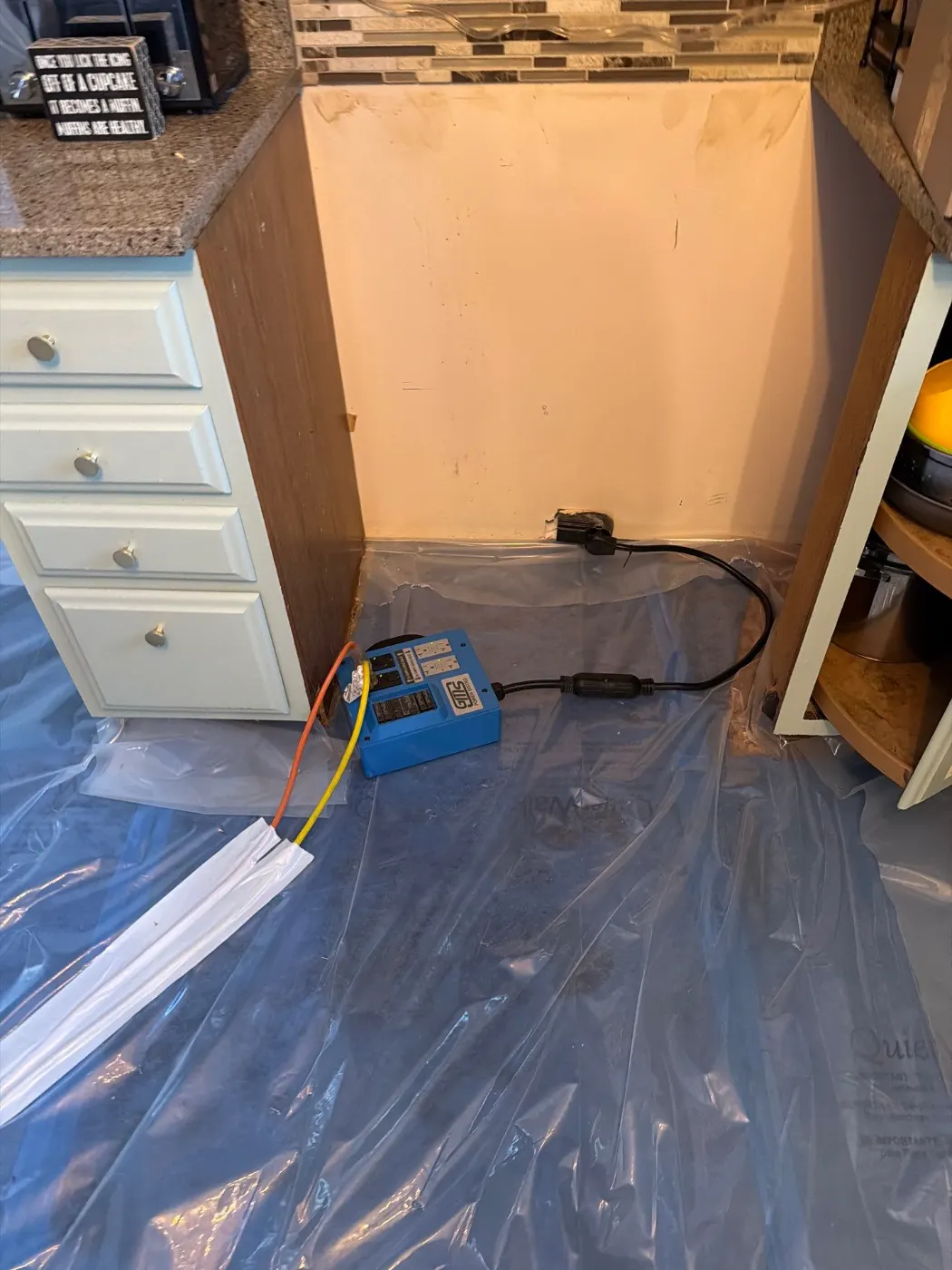
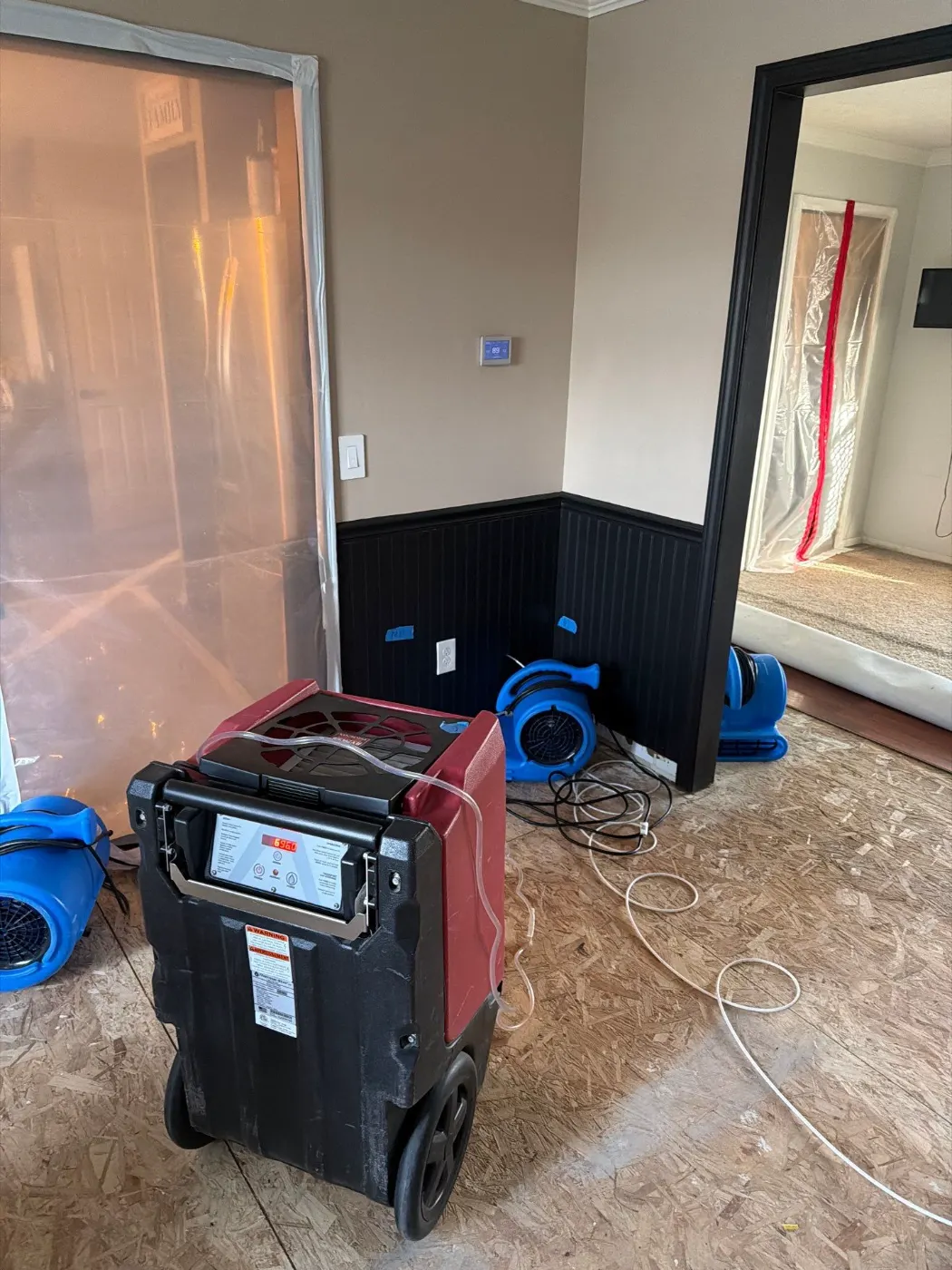
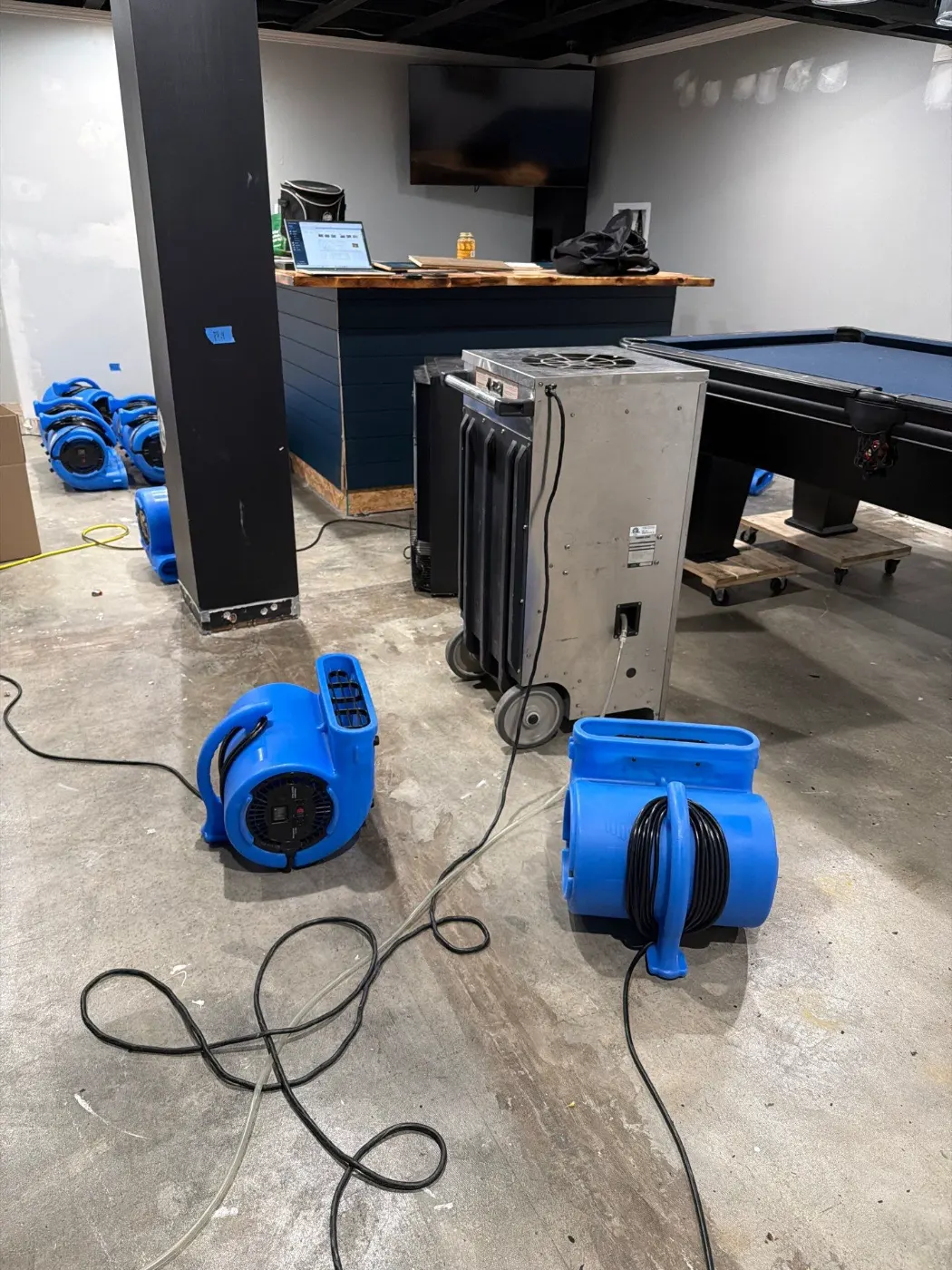
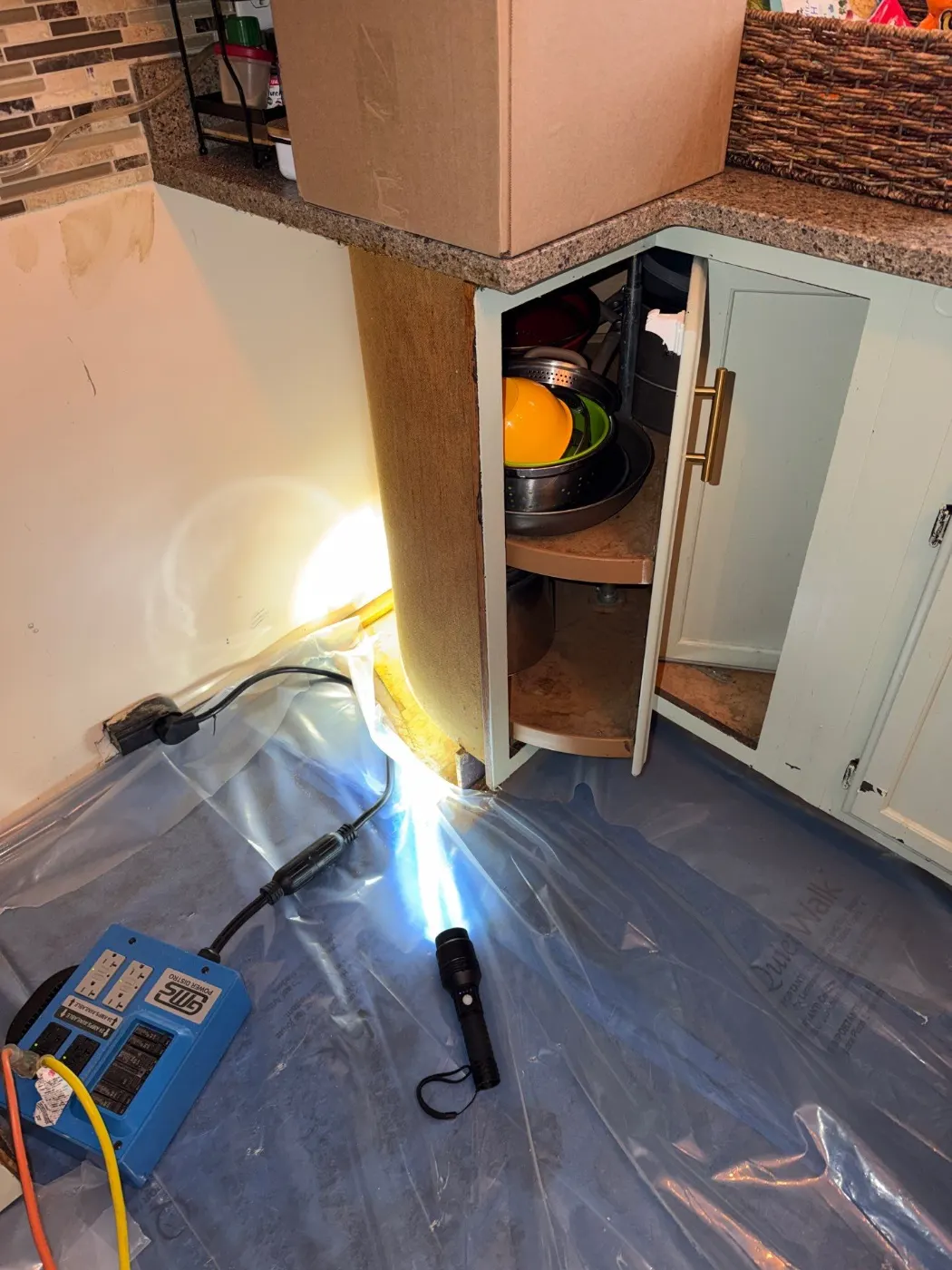
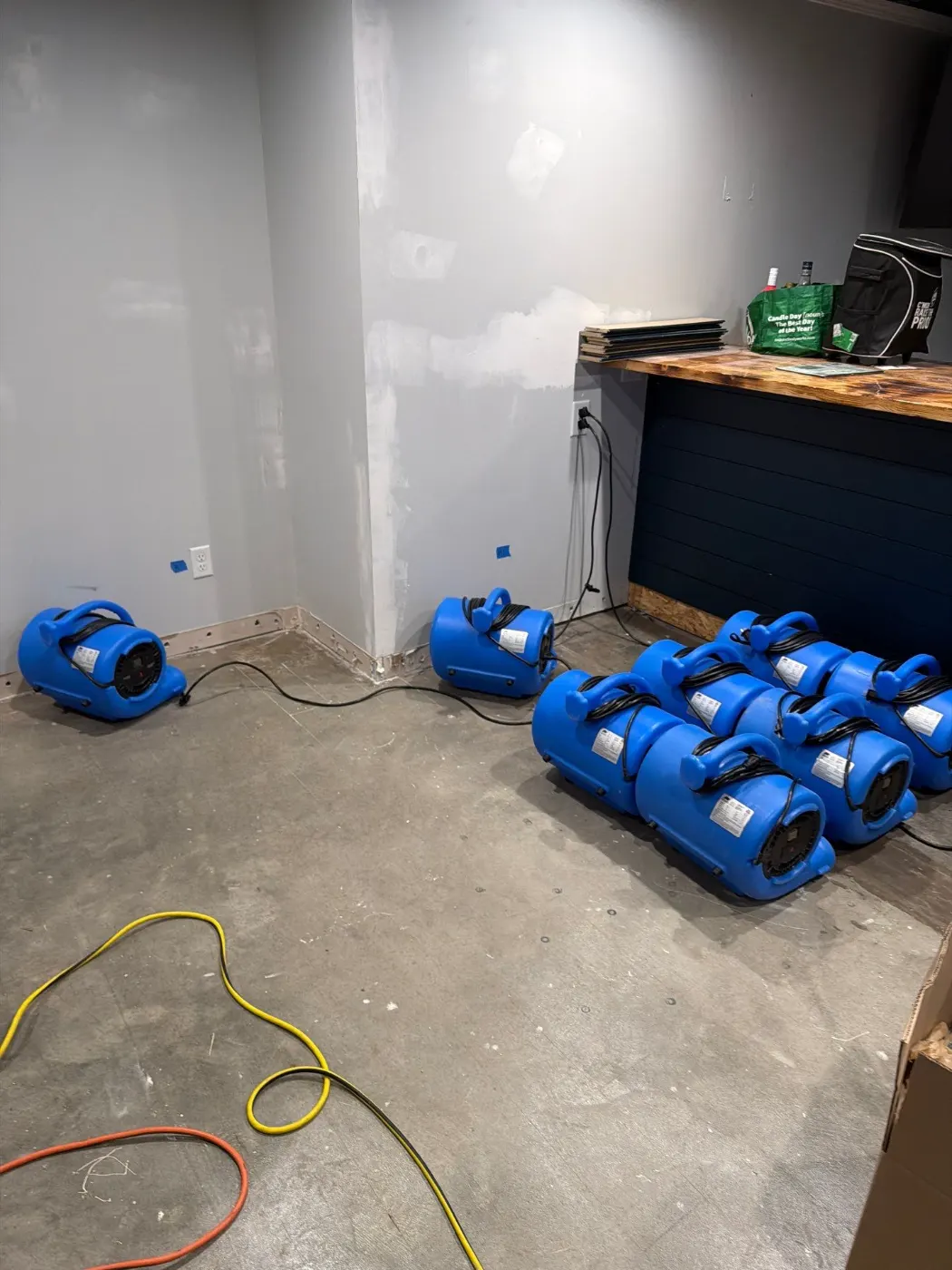
Photographs from real commercial mold remediation jobs completed by our crew in New Whiteland and surrounding areas.
Commercial Mold Remediation FAQ
Questions New Whiteland property managers ask us about commercial mold remediation.
Guidance and Standards for Commercial Mold Remediation
- The ANSI/IICRC S520 is the published standard for professional mold remediation. The current edition is the Fourth Edition, 2024. IICRC S520 Standard
- EPA’s mold guide says the key to mold control is moisture control. EPA: A Brief Guide to Mold, Moisture and Your Home
New Whiteland Neighborhoods We Serve
We take commercial mold remediation calls in every part of New Whiteland. Pick your neighborhood for local details.
Other Restoration Services in New Whiteland
New Whiteland Water Restoration handles the full scope of restoration work. Explore our other services below.
Water Damage Restoration in New Whiteland
24/7 emergency response. IICRC certified water restoration from extraction to full dry out.
Learn more →Basement Flooding in New Whiteland
Basement water emergencies handled fast. Extraction, drying, mold prevention.
Learn more →Sewage Cleanup in New Whiteland
Category 3 biohazard cleanup. Full containment, decontamination, structural restoration.
Learn more →Request Commercial Mold Remediation
Reach Us Directly
Our team is available 24/7 for emergencies and ready to schedule inspections during business hours.
Need Immediate Help?
For active water or mold emergencies, call us directly. We are available 24/7.