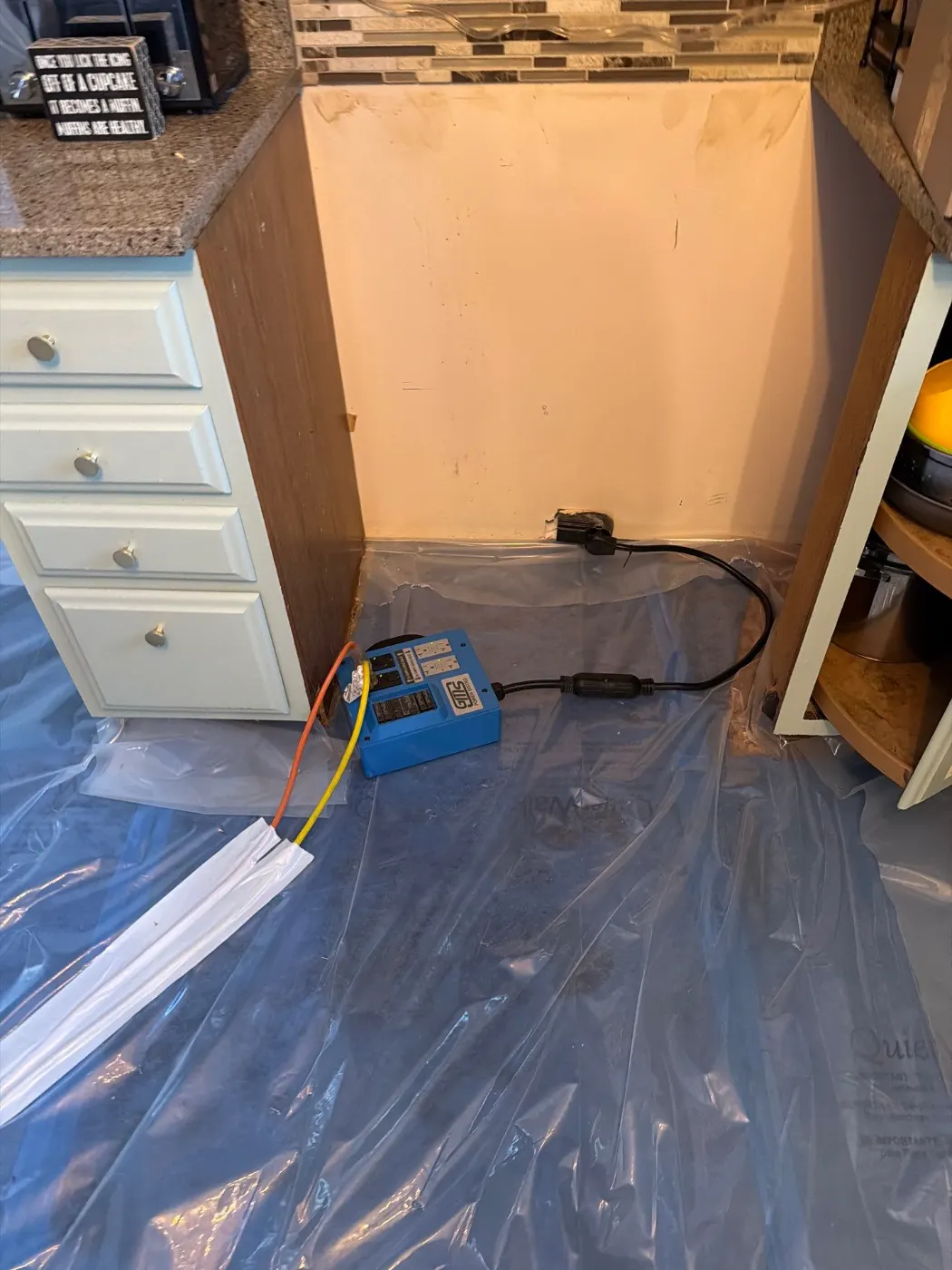
Commercial Storm Damage in New Whiteland, IN
New Whiteland Water Restoration documents commercial storm losses in New Whiteland the way a carrier's reviewer wants to receive and read them.
New Whiteland Water Restoration provides Commercial Storm Damage in New Whiteland, IN. 24/7 emergency response with IICRC certified crews, and we work with your insurance carrier on approved claims. Call (463) 223-3831 for immediate dispatch.
- Service: Commercial Storm Damage for New Whiteland homeowners
- Service area: New Whiteland, IN and surrounding areas
- Response time: Emergency calls from New Whiteland dispatched immediately, day or night
- Licensed and insured (License #RC21100059)
- Serving New Whiteland, IN since 2018
Commercial Storm Damage Cleanup in New Whiteland
We handle commercial storm damage cleanup across New Whiteland, and we'll work around the parts of the building that need to stay open.
Storms Here
Spring and summer are severe thunderstorm season here. NWS Indianapolis posts summaries of past storms, which helps when your carrier asks for a date.
We respond to storm calls from businesses anywhere in New Whiteland, including those around Whiteland Community High School and the US Highway 31 corridor. We also handle commercial storm damage in Edinburgh, Franklin, Bargersville and Greenwood.
Commercial Storm Damage for New Whiteland Businesses
A curtain wall that lets storm water in often shows it at the perimeter, where fan coil cabinets and floor boxes sit within a few feet of the glass. The water can wet the cabinets and the carpet edge, then run down into the slab, while the center of the floor stays dry. New Whiteland Water Restoration checks the whole glass line in your New Whiteland building and dries what the meters flag.
Every cord that runs through a wet area goes through ground fault protection, and the crew checks panel labels with your building engineer before touching any circuit that serves the space. Equipment gets staged off the floor where it can be, and the electrician decides what's safe to reenergize. Those checks happen before the first dehumidifier is plugged in at your New Whiteland property.
When a roof drain backs up inside your New Whiteland building, the crew treats the point where the water came out as the center of the job. Sediment and debris get cleaned off the floor and the walls around it before drying begins, and the chase or ceiling space the leader runs through is opened and checked. The building engineer or a plumber clears the drain line itself.
A one page summary at the front of the file helps a reviewer with a stack of claims to read. New Whiteland Water Restoration puts the dates, the areas affected, the equipment days and the final readings on that page, with the detailed logs behind it. The summary for your New Whiteland building is written from the daily records as the job closes.
On a wet floor plate, the first call sets up everything after it. New Whiteland Water Restoration dispatches to New Whiteland, IN commercial losses day or night with crews and equipment sized to the floor. You can forward the daily readings to your adjuster as the drying runs.
Signs You Need Commercial Storm Damage Restoration
If you notice any of these in your New Whiteland building, schedule a free inspection before the issue worsens.
Rust on the metal stud track at the bottom of a wall cavity once an opening is cut
Standing water in a rooftop unit's drain pan, or condensate running down the duct below it
Window sills or curtain wall mullions holding water on the inside face after wind driven rain
Interior glazing sealant that's cracked, pulled loose, or missing along a run of joints
Light fixtures out in one zone of the ceiling grid after a storm, with the breaker holding
Rust streaks or white efflorescence running down an interior wall below a parapet line
Ceiling tiles sagging, stained brown at the center, or crumbling along the grid in one area of a floor
Stored records or fixtures with wet edges or water stains along the bottom
Carpet tile that squishes underfoot along the glass line of a storefront or window wall
Leak sensors or pit alarms going off in a mechanical room or IT closet during a storm
How New Whiteland Water Restoration Handles Commercial Storm Damage
We follow these steps in order on every New Whiteland job.
Power and Safety Walk
Before extraction starts, the crew walks the wet areas with your building engineer and confirms which circuits serve them. Cords run through ground fault protection, and the electrician decides what can be reenergized.
Water Path Check
The crew traces the water from the roof breach down through the ceiling to the floors below and photographs the path. Water that backed up out of a drain tied into a sanitary line gets handled as sewage, and that call drives the protocol.
Water Category Call
Rain that started clean can worsen in category as it sits, so the crew classifies the water as it entered and again as it has aged. That call sets which materials get cleaned in place and which come out.
Cavity Inspection Openings
Where meters or thermal imaging point to hidden water, the crew opens a small inspection hole or lifts a tile. What the probe finds inside decides how much larger the cut needs to be.
Daily Readings Logged
Each day brings temperature, relative humidity and material moisture readings logged against an unaffected baseline elsewhere in the building. Equipment moves based on what the numbers show. The property manager gets the readings and the photos the same day.
Commercial Storm Damage in New Whiteland
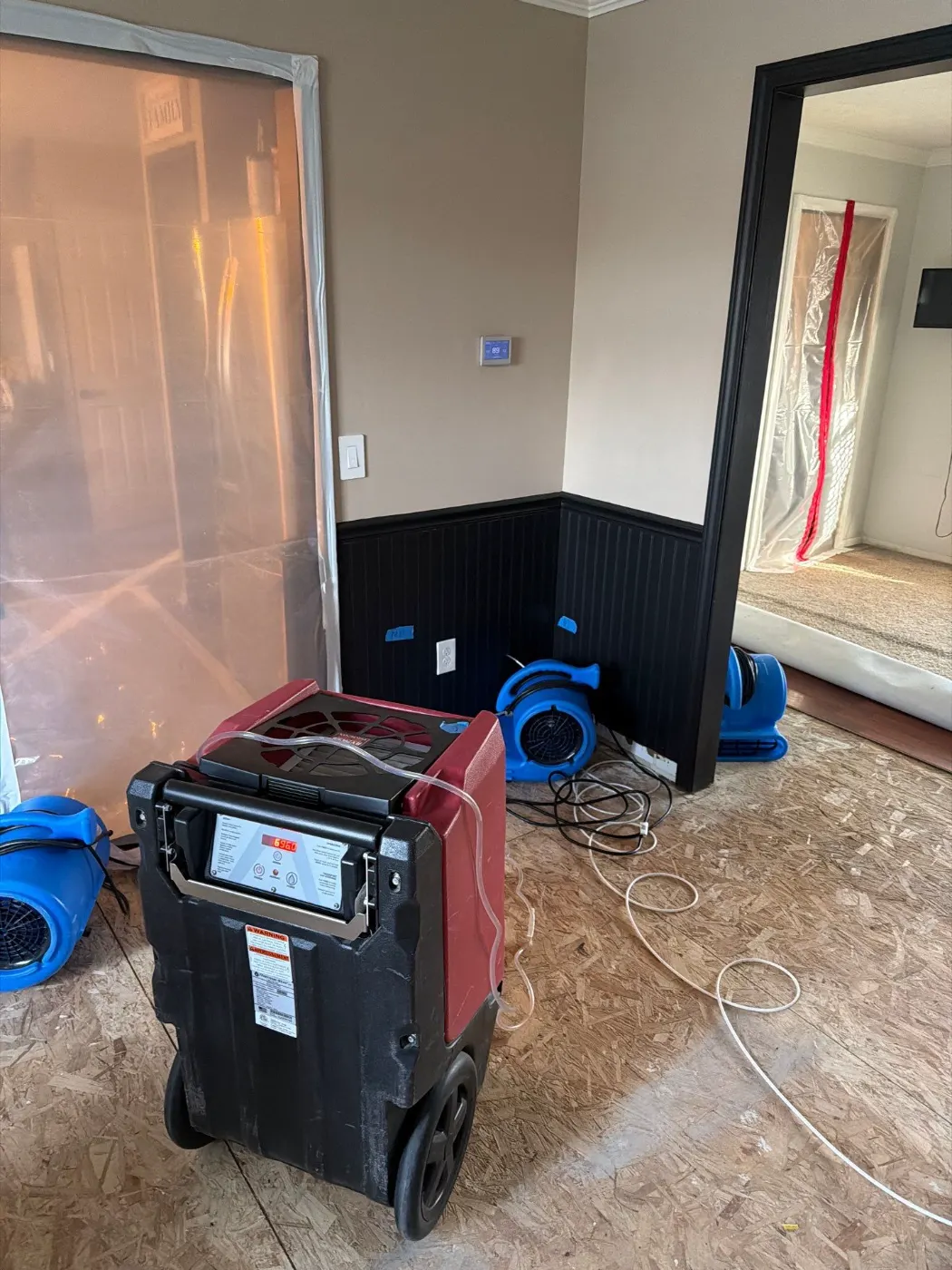
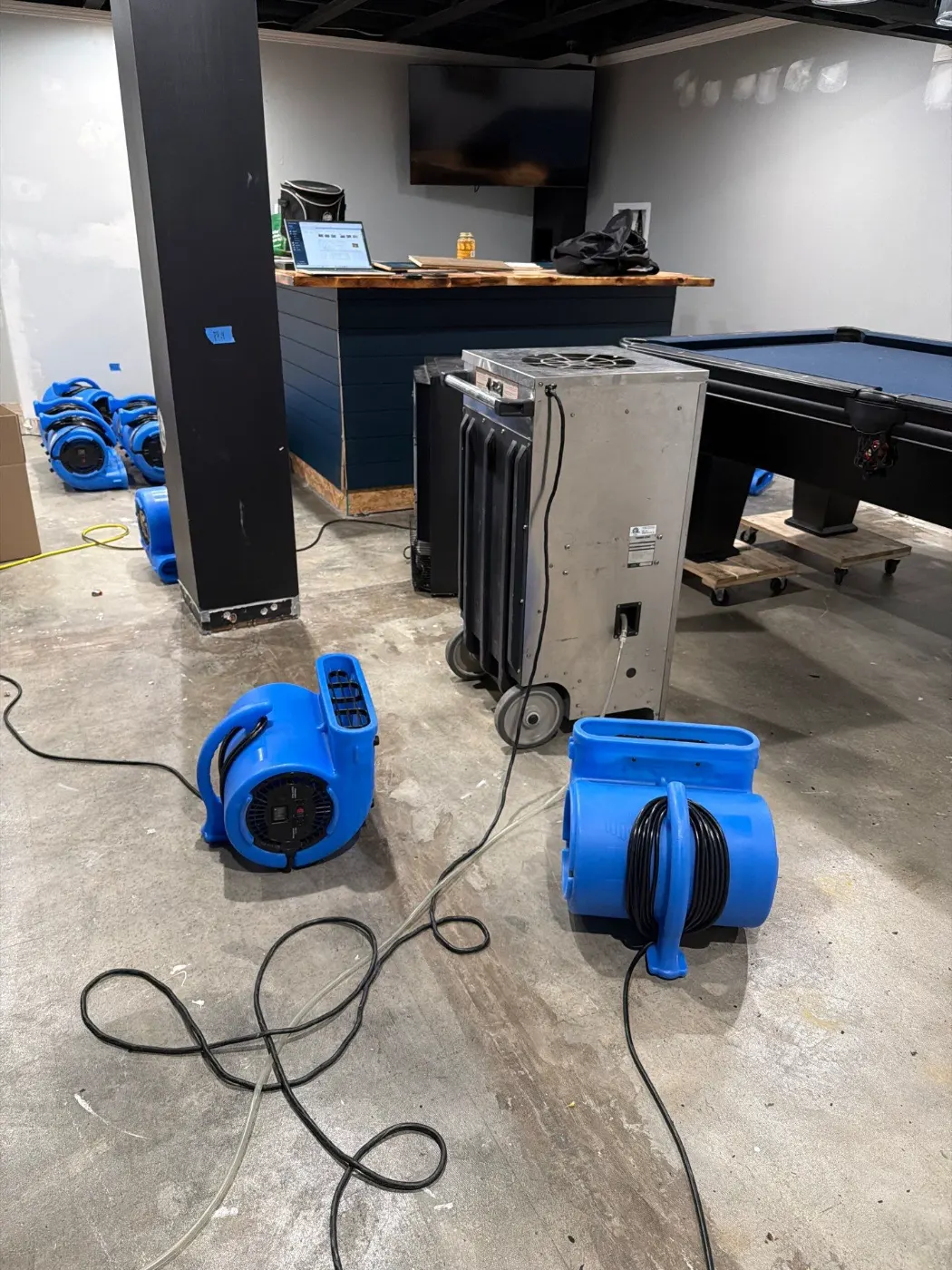
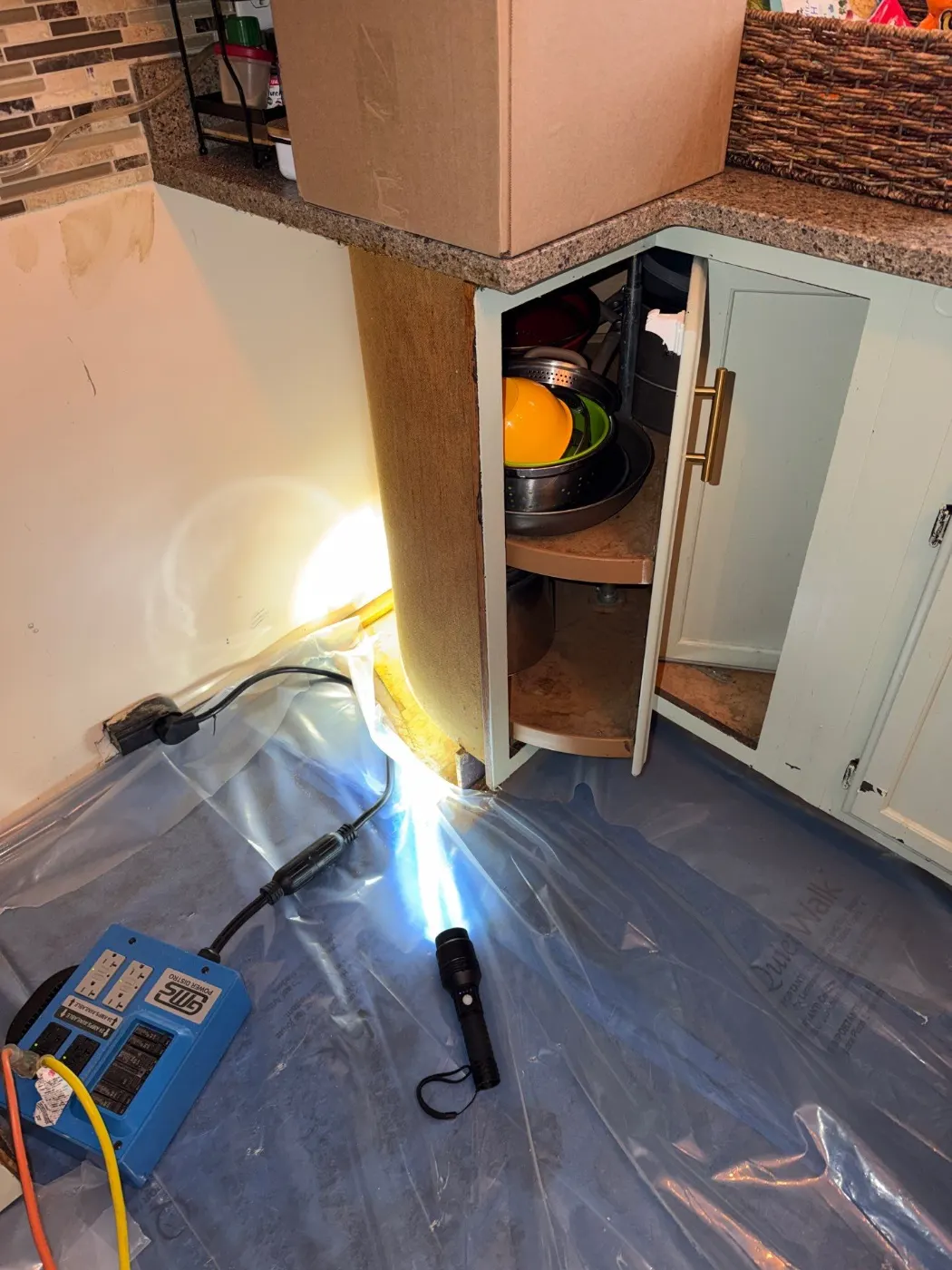
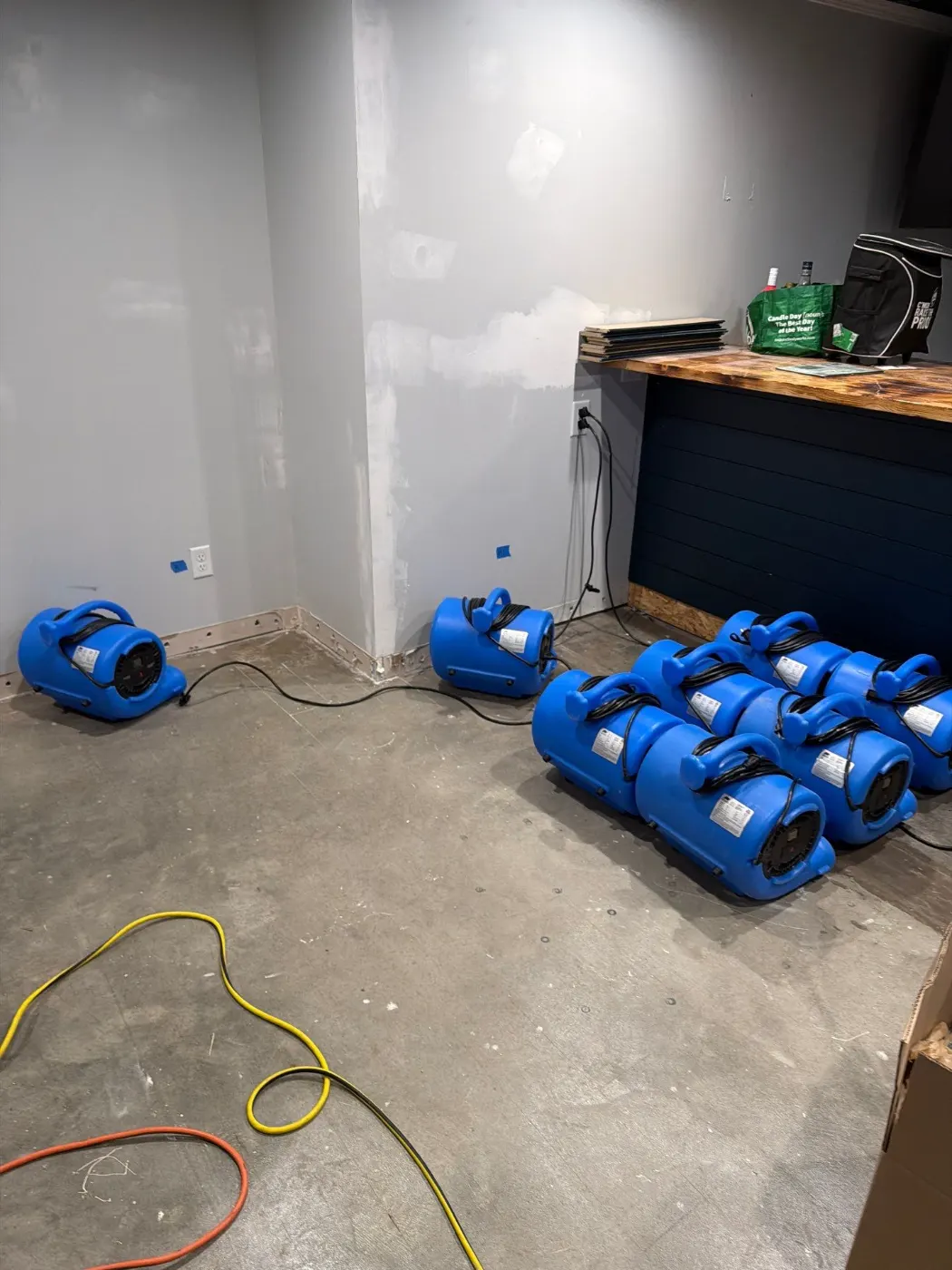
Photographs from real commercial storm damage jobs completed by our crew in New Whiteland and surrounding areas.
Commercial Storm Damage FAQ
Questions New Whiteland property managers ask us about commercial storm damage restoration.
Guidance and Standards for Commercial Storm Damage
- The National Weather Service office in Indianapolis posts summaries of recent central Indiana storm and flood events. NWS Indianapolis Event Summaries
- The ANSI/IICRC S500 is the published standard for professional water damage restoration. The current edition is the Fifth Edition, 2021. IICRC S500 Standard
New Whiteland Neighborhoods We Serve
We take commercial storm damage calls in every part of New Whiteland. Pick your neighborhood for local details.
Other Restoration Services in New Whiteland
New Whiteland Water Restoration handles the full scope of restoration work. Explore our other services below.
Water Damage Restoration in New Whiteland
24/7 emergency response. IICRC certified water restoration from extraction to full dry out.
Learn more →Basement Flooding in New Whiteland
Basement water emergencies handled fast. Extraction, drying, mold prevention.
Learn more →Sewage Cleanup in New Whiteland
Category 3 biohazard cleanup. Full containment, decontamination, structural restoration.
Learn more →Request Commercial Storm Damage Restoration
Reach Us Directly
Our team is available 24/7 for emergencies and ready to schedule inspections during business hours.
Need Immediate Help?
For active water or mold emergencies, call us directly. We are available 24/7.